Bitola
Bitola
Nicknamed the 'City of Consuls,' Bitola blends Ottoman heritage, ancient remains of Heraclea Lyncestis, and the pristine nature of Pelister National Park.
Located in the southwest of North Macedonia, Bitola is a destination that intertwines history, culture, and modernity. Recognized as the country's second-largest city in terms of population and size, it is renowned for its rich Ottoman heritage and cosmopolitan atmosphere. It also captivates visitors with its elegant architecture, lively streets, and fascinating historical sites. Whether you are passionate about history, culture, or seeking adventure, Bitola will enchant you with its unique charm and welcoming atmosphere.
Location
Bitola enjoys a privileged geographical setting, nestled within the expansive Pelagonia valley. Just 13 km from the Greek–Macedonian border at Medžitlija–Níki, the city occupies a strategic position linking the Adriatic region to the Aegean Sea and central Europe. Bordered by the Dragor River and dominated by Mount Baba, whose Pelister peak rises to 2,601 meters, it sits at an elevation of 615 meters. Its remarkable natural environment places it near Ohrid, Pelister National Park, and the Galicica Mountains, reinforcing its appeal as both a historical and tourism destination.
History
Bitola is one of the region's oldest cities, with a rich history stretching back to antiquity. Founded in the 4th century BCE by Macedonian King Philip II under the name Heraclea Lyncestis, it became an important Hellenistic, Roman, and Byzantine center. Remains from this era still testify to its prestigious past. By late antiquity, it had become a major episcopal center before being affected by the arrival of the Slavs in the 6th century.
During the Middle Ages, a new city rose near the ruins of Heraclea. It fell successively under Byzantine and Bulgarian control, as well as Serbian kingdoms, before being conquered by the Ottomans in the late 14th century. Under Ottoman rule, Bitola became a prosperous administrative and commercial hub, hosting as many as 12 foreign consulates, earning it the epithet 'City of Consuls.' Its refined European architecture still evokes this flourishing period.
The 19th and 20th centuries were marked by conflicts and political upheaval. The city witnessed the Ilinden–Preobrazhenie uprising in 1903, led by IMARO (Macedonian–Adrianople Revolutionary Organization) against the Ottoman Empire. Then in 1912, struggles between Serbia and Bulgaria erupted during the Balkan Wars, followed by World War I in 1915. Bombarded and largely destroyed until 1918, Bitola subsequently became part of the Kingdom of Serbs, Croats, and Slovenes, then Yugoslavia. After World War II, the city remained part of the Socialist Republic of Macedonia until the country's independence in 1991.
Today, Bitola preserves a rich historical and cultural heritage. Ten countries still maintain consulates here, perpetuating its diplomatic role. At the crossroads of influences, Bitola continues to blend legacy with modernity, affirming its place at the heart of North Macedonia.
Festivals and Events
Bitola is a vibrant city where culture holds a central place throughout the year. The city pulses with numerous cultural and music festivals, offering visitors a unique immersion into the Macedonian artistic scene. Among the most prestigious events, the international 'Manaki Brothers' Film Festival honors the pioneers of cinematography, Yanaki and Milton Manaki. Established in 1979, it is the world's oldest festival dedicated to the art of cinematography and directing. Taking place annually in September, it attracts film professionals and celebrities from around the globe. Its flagship program, 'CAMERA 300,' showcases directors of photography and recent feature films, rewarded with gold, silver, and bronze prizes presented by an international jury.
Bitola is easily accessible and connects the main cities of North Macedonia and the Balkans. From Skopje, for example, it takes approximately 2.5 hours to reach the city by car or train, with intermediate stops in Prilep and Veles.
The bus network is also well developed, offering daily links between Bitola and Skopje (approximately 3 hours), as well as routes to Ohrid (1.5 hours) via Resen. The bus and train stations are located south of the city center, near the municipal park.
It is also worth noting that the city is traversed by Eurocorridor 8, an axis connecting Italy, Albania, North Macedonia, Bulgaria, and Caucasus countries.
Attractions
The city of Bitola abounds with attractions and historical monuments worth discovering. Here are some essential places and buildings to visit:
Širok Sokak Street
At the heart of Bitola, Širok Sokak embodies the vibrant soul of the city. This iconic pedestrian street, lined with neoclassical buildings with colorful façades, is the nerve center of local life. Day and night, it invites leisurely wandering, offering a lively atmosphere punctuated by cafés, restaurants, and shops where locals and visitors gather to share a convivial moment.
The Old Bazaar
The Old Bazaar or Stara Čaršija, a remnant of a flourishing commercial past under the Ottoman Empire, is a genuine journey through time. Once one of the Balkans' most dynamic trading centers, it counted over a thousand artisanal workshops. In the 1950s, part of the bazaar was demolished for the construction of the central square. Nevertheless, its most emblematic monuments were preserved. Today, though its activity has diminished, its cobblestone alleys still hold beautiful discoveries among traditional shops, bustling markets, and artisans' workshops perpetuating ancestral craftsmanship.
The Heraclea Lyncestis Archaeological Site
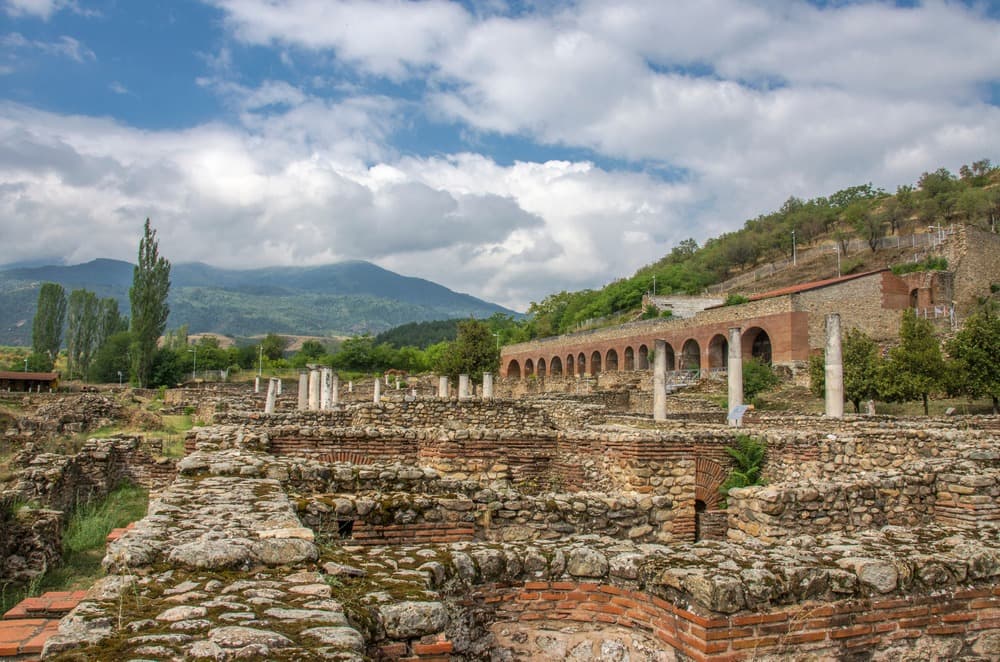
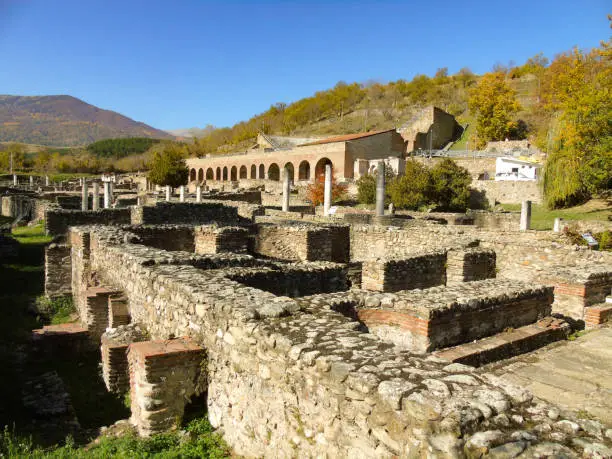
Just a few kilometers from Bitola, the archaeological site of Heraclea Lyncestis, meaning 'City of Hercules on the Land of the Lynx,' reveals the remains of an ancient city. Named in tribute to Hercules, this city flourished under the Roman Empire thanks to its strategic position on the Via Egnatia, an important trade route connecting the Adriatic to the Aegean Sea.
Part of the city has been excavated to this day. The still-visible ruins testify to its prosperous past:
- An ancient amphitheater capable of accommodating approximately 3,000 spectators
- Roman thermal baths
- A tribunal
- A portico
- Two fountains
- Two paleochristian basilicas
- An episcopal palace
- Finely decorated mosaics
- Ramparts.
Today, this site ranks among the most remarkable in the Balkans. An adjacent museum displays artifacts and a model reconstructing the city at its height. Open year-round, Heraclea Lyncestis offers history and archaeology enthusiasts a captivating immersion into the region's rich Greco-Roman and Byzantine heritage.
Museums and Cultural Institutions
Bitola houses several museums and art galleries that attest to its history and artistic dynamism. The Bitola Museum, for instance, is housed in a former Ottoman military barracks dating from 1848. Its permanent exhibition traces the Neolithic, Hellenistic, Roman, and Byzantine periods through an impressive archaeological and ethnographic collection.
Moreover, the House of Mustafa Kemal Atatürk hosts exhibitions on the founder of modern Turkey's youth, having studied here at the Ottoman Military Academy. Furthermore, the local artistic scene is also showcased at the Magaza Gallery, a dynamic space regularly welcoming exhibitions and cultural events.
Churches and Mosques
The Church of Saint Dimitri, built in 1830, is one of Bitola's religious jewels. Its austere exterior, imposed by the Ottomans, contrasts with its richly adorned interior. This three-nave basilica houses a magnificently carved iconostasis from 1845 by Mijak artisans, as well as a finely crafted episcopal throne and sumptuous chandeliers. Another remarkable edifice, the Church of Saint Bogorodica, built in 1870, captivates with its octagonal dome and exquisitely carved iconostasis.
Furthermore, traces of the city's Ottoman heritage are also found in its impressive Islamic monuments. The Jeni Mosque, built in 1558, distinguishes itself today as an art gallery. The Isak Beg Mosque, the Yahdar-Kadi Mosque, and the Kodža-Kadi Mosque, among Bitola's finest Islamic buildings, testify to the architectural influence of the era.
Pelister National Park
Located near Bitola, Pelister National Park is a natural oasis ideal for outdoor enthusiasts. Nestled within the Baba massif, it spans 125 km² and harbors peaks exceeding 2,000 meters in elevation. Its varied landscapes, between dense forests and open valleys, make it a privileged destination for hiking, climbing, and horseback riding. Among its natural treasures, the famous 'Eyes of Pelister,' glacial lakes of breathtaking beauty, offer spectacular panoramas.
This park is also a true ecological sanctuary where wolves, deer, and bears roam alongside other more discreet wildlife. Its flora is equally remarkable, notably featuring Molika pine, a rare species endemic to the Balkans. In winter, Pelister transforms into a ski resort, while summer unveils hiking trails and mountain biking routes.
Want to discover this destination?
Our local advisors design your tailor-made trip.