Stobi
Stobi
Stobi is a vast Roman and paleochristian archaeological site located near Gradsko, in North Macedonia. Its theater, mosaics and basilicas make it one of the most complete ancient sites in the Balkans.
Stobi is one of the best-preserved archaeological sites in the Balkans. An ancient Roman and paleochristian city, it spreads across the confluence of the Vardar and Axios (Crna Reka) rivers, midway between Skopje and Thessalonica. Its mosaics, basilicas and theater testify to a city that was the capital of the Roman province of Macedonia Secunda. The visit appeals equally to history enthusiasts and travelers curious to understand the historical depth of the region.
Practical Information at a Glance
- Entrance: paid admission (ticket includes on-site museum)
- Recommended duration: 2 to 3 hours to explore the entire site
- Attire: walking shoes recommended — uneven terrain, ancient paving
- Access: open-air site, partially accessible; some areas remain difficult for people with reduced mobility
- Transportation: car recommended; the site is located near the A1 motorway (Skopje–Thessalonica), Gradsko exit
What You'll See
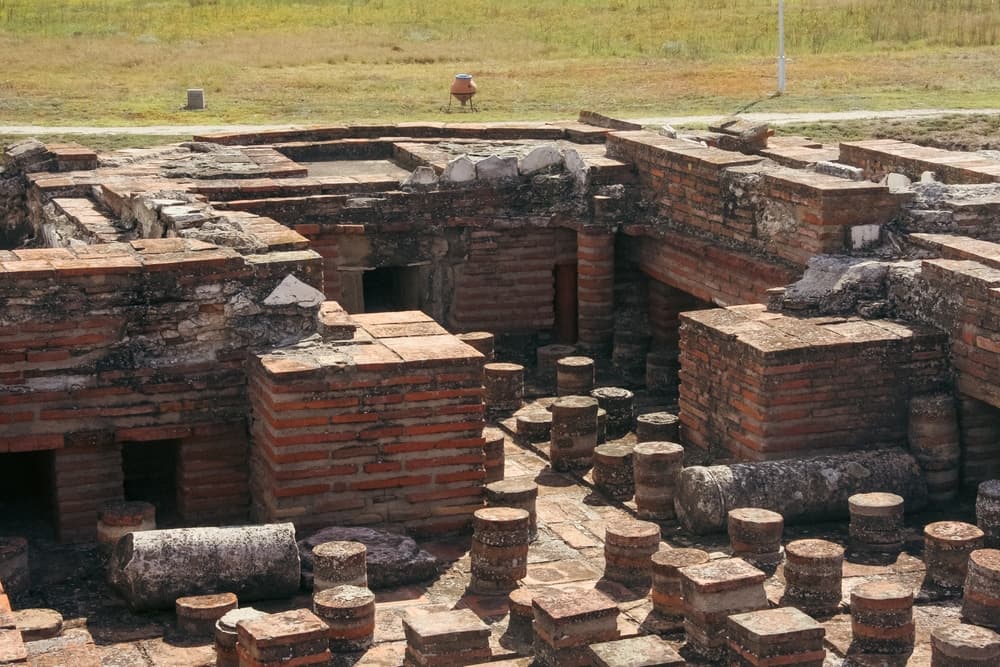
The site covers several hectares of cleared ruins. You can clearly distinguish a well-preserved Roman theater, several paleochristian basilicas adorned with polychrome mosaics, baths, an episcopal palace, patrician houses and a network of paved streets. The on-site museum displays objects unearthed during excavations: coins, sculptures, ceramics and architectural elements.
History and Context
Stobi is mentioned as early as the 3rd century BC as a city of the Paeonian kingdom. It falls under Roman control in the 2nd century BC and reaches its peak between the 1st and 5th centuries AD. It becomes an important Christian bishopric: several councils are attested there. Successive earthquakes and invasions by Huns and then Slavs in the 6th century lead to its decline. Systematic excavations began in the 20th century and continue today.
Highlights of Your Visit
The Roman Theater
Built in the 1st century AD and enlarged later, the theater could accommodate several thousand spectators. The cavea is partially restored. It is one of the few visible Roman theaters in North Macedonia.
The Basilica Mosaics
The paleochristian basilicas — notably the Episcopal Basilica — preserve floor mosaics with geometric and vegetal motifs of great finesse. Some panels are protected by shelters. They rank among the finest late Roman mosaics in the Balkans.
The House of Polycharmos
This 4th-century patrician residence reveals the organization of a wealthy Roman urban home: atrium, reception rooms, floor mosaics. A Greek inscription identifies the owner.
The Site Museum
Small but rich in content, it contextualizes the discoveries with clear labels. The coins and sculptures on display allow you to grasp the chronological span of the site's occupation.
Photography Tips
Morning light is ideal for photographing mosaics without reflections. The theater lends itself well to overhead shots from the upper tiers. Avoid midday in summer: the light is harsh and the heat intense. Mosaics under shelter require higher ISO settings.
Location and Access
Stobi is located near the village of Gradsko, in the Vardar valley, approximately 80 km south of Skopje and about 130 km north of Thessalonica. Car access is easy from the A1 motorway. No direct public transportation link is confirmed with certainty from Skopje; a rental car remains the most practical option. The site can be combined with a visit to Ohrid or Heraclea Lyncestis as part of a circuit through the country.
Nearby Attractions
- Heraclea Lyncestis — another major archaeological site in North Macedonia, near Bitola, with remarkable mosaics.
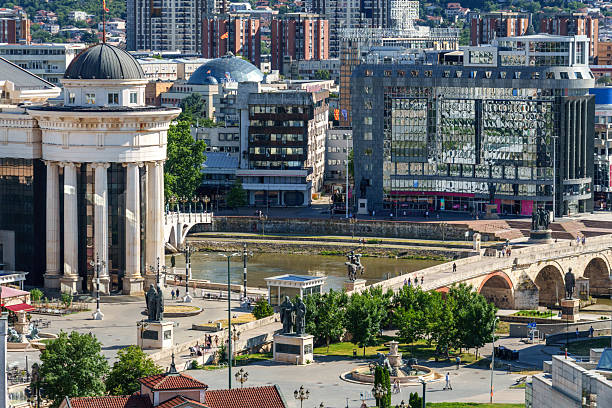
- Old Town of Skopje (Čaršija) — lively Ottoman bazaar, approximately 80 km to the north.
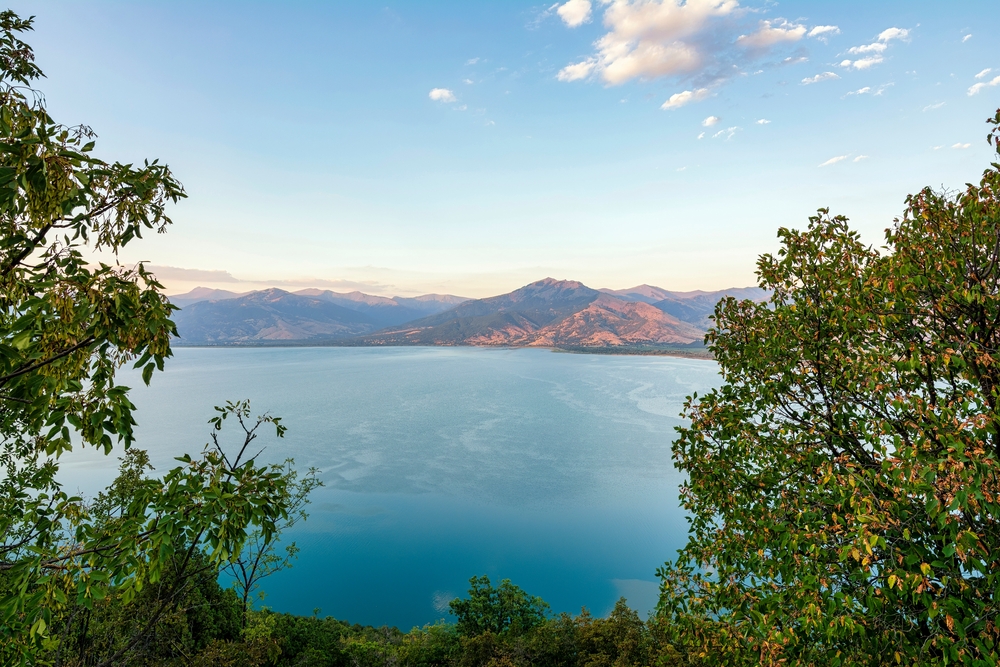
- Lake Ohrid — UNESCO-listed lake, in the western part of the country, can be combined in a circuit.
Frequently asked questions
Spring (April-May) and autumn (September-October) offer pleasant temperatures for exploring this open-air site. Summer is hot and sunny, but the heat can be intense during midday.
Plan for 2 to 3 hours to explore the site and museum at a leisurely pace. History enthusiasts can easily spend half a day there.
Access is partial: the main pathways are passable, but excavation areas and some sectors have uneven ground that is difficult for wheelchairs or strollers.
Photography is generally permitted on the site. No specific restrictions are noted for outdoor mosaics. Check the museum rules upon arrival.
A car is the most practical means: approximately 80 km via the A1 motorway toward Thessalonica, Gradsko exit. A rental car from Skopje allows you to combine Stobi with other sites in central Macedonia.
Yes. Heraclea Lyncestis, near Bitola, is the other major Roman site in the country. Both can be integrated into a two to three-day circuit across North Macedonia.
Interested in this visit?
We can include it in your personalised itinerary.