Lake Ohrid
A tectonic lake three million years old, Byzantine old town and fishing villages at 695 m elevation, between North Macedonia and Albania.
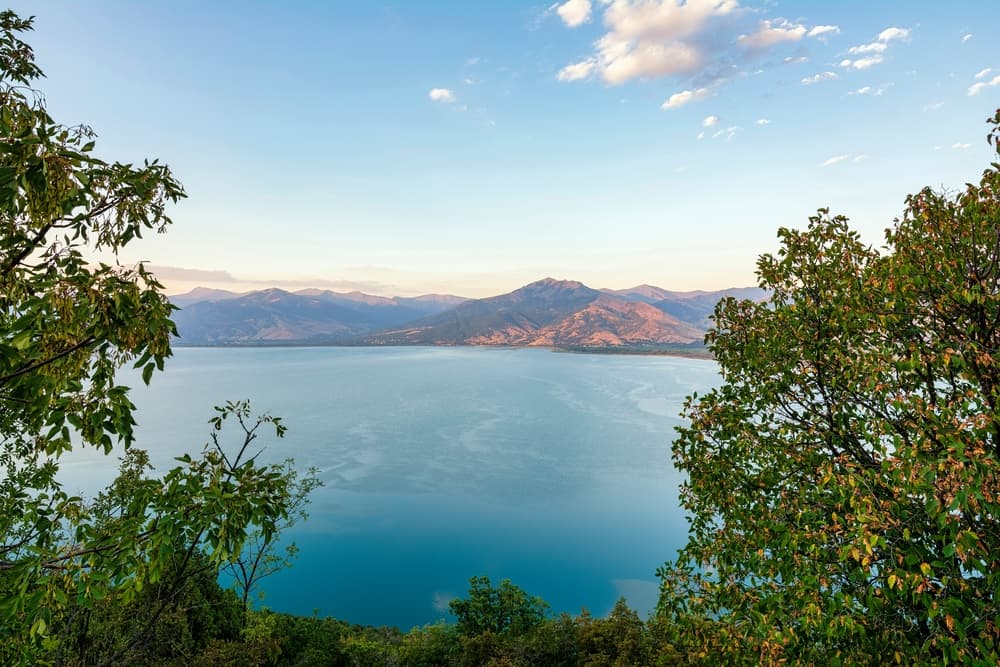
Lake Ohrid stretches across 358 km² at 695 m elevation, shared between North Macedonia and Albania. It is one of Europe's oldest lakes, formed some three million years ago in a tectonic depression. This age explains its endemic fauna: over 200 species exist nowhere else on Earth, including the Ohrid trout (pastrmka) and several freshwater snails that biologists come to study from Skopje, Belgrade, and Geneva. The depth reaches 288 m at the center, and the water remains transparent enough to see the bottom to a depth of 20 m near the southern shores.
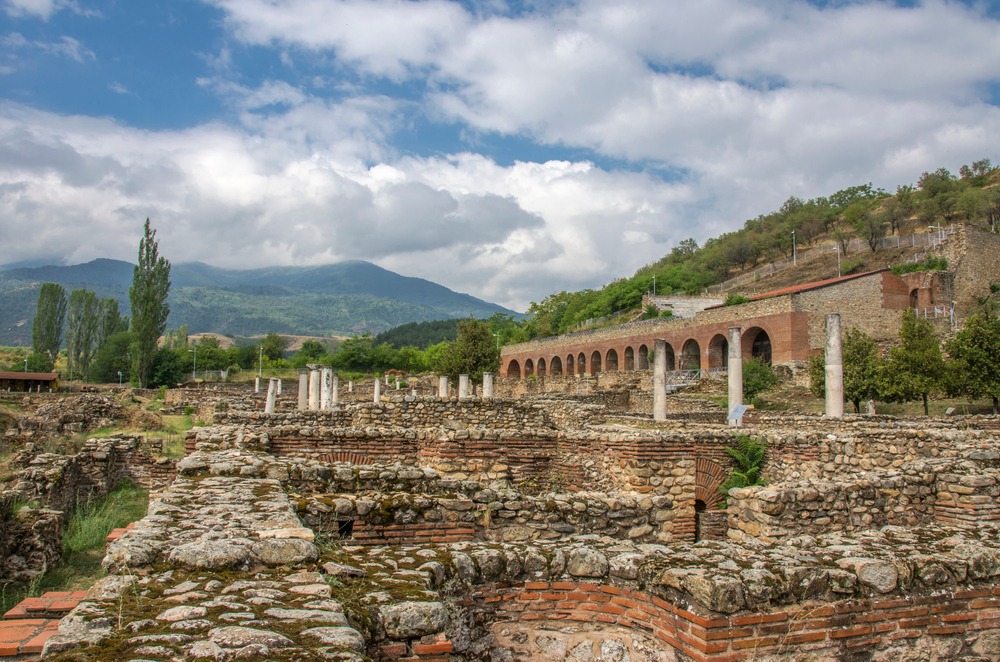
The city of Ohrid, on the north-eastern shore, has approximately 42,000 inhabitants and concentrates the bulk of its built heritage. The urban fabric dates back to the ancient Macedonian kingdom, then becomes under Tsar Samuel, around the turn of the millennium, the religious center of the First Bulgarian Empire. This double layer, ancient and then Slavo-Byzantine, gives the old town its present form: cobbled streets climbing toward Samuel's fortress, houses with dark wooden corbelled overhangs, and a rare concentration of churches in the Balkans. Local tradition speaks of 365 churches, one for each day of the year. The figure is exaggerated but testifies to the religious weight of the city, long the seat of an autocephalous archdiocese.
South of the city, the road hugs the lake for some thirty kilometers to Saint Naum Monastery, founded in 905 by a disciple of Saint Clement. The site marks the border with Albania and houses the underground sources of the Crn Drim river: you cross by flat-bottomed boat a network of resurgences fed by the neighboring Lake Prespa, situated 150 m higher, whose water filters through the limestone massif of Galičica. This national park, which separates the two lakes, peaks at 2,254 m and remains accessible by vehicle via a track offering panoramic views of both bodies of water.
Local cuisine revolves around lake fish. The Ohrid trout is protected and its fishing regulated; restaurants now mostly serve belvica, an endemic whitefish, or farmed trout. In Trpejca, a small fishing village wedged between the cliff and the shore, a few families still offer grilled fish on terraces overlooking the water. Wine here includes plum rakija or white wine from Tikveš, 150 km to the east. Flat bread (pogača) and red pepper ajvar accompany most meals.
The economy of the Macedonian shore lives largely from tourism, primarily summer and regional: North Macedonians, Albanians from Kosovo, Serbs, and Bulgarians flock here in July-August. The organized beaches of Struga, 15 km to the west, and Pestani concentrate most of this traffic. The shore remains passable outside peak season, and fishing villages like Trpejca or Lagadin maintain a calm rhythm from September onward. Culturally, the Ohrid Summer festival (mid-July to mid-August) programs classical concerts and theater in the ancient amphitheater and the Church of Saint Sophia.
For our team, Ohrid is not merely a beach stopover. It is the articulation point between Macedonian Byzantine heritage and the alpine geography of the country's south-west, one hour's drive from the Galičica and Jablanica massifs, and two hours from Bitola via the Resen road.
To Discover
Saint John of Kaneo on its cliff. A small 13th-century church perched on a promontory above the lake, a twenty-minute walk from Ohrid's old town via the waterside path. The late-afternoon light here is at its finest.
Underground sources of Saint Naum. A thirty-minute flat-bottomed boat tour through the resurgences of Lake Prespa, at the Albanian border. The monastery's peacocks roam freely through the 10th-century gardens.
Crossing Galičica National Park. Winding road between the two lakes, with a stop at the 1,600 m viewpoint overlooking Ohrid to the west and Prespa to the east. Allow a half-day from Ohrid.
Evening in Trpejca. Fishing village of 70 inhabitants, accessible via a steep road. Dinner of grilled belvica on terraces right at water's edge, swimming at the foot of stone houses.
Ancient Theater of Ohrid in concert. Hellenistic amphitheater from the 4th century B.C., rediscovered in 1980 beneath Ottoman houses. During the Ohrid Summer festival, it hosts classical open-air performances.
When to Go
Our recommended season runs from mid-May through late June, then from the first week of September through mid-October. In May-June, daytime temperatures range between 22 and 27°C, lake water approaches 20°C by mid-June and swimming becomes comfortable. The monastery gardens at Saint Naum are in bloom and villages remain calm. In September, water stays at 22-23°C through early October, skies are clear, and light suits photography of exterior frescoes well.
July and August concentrate regional crowds: temperatures of 30 to 34°C, lake at 24-25°C, but accommodations are fully booked in Ohrid town and queues form for Saint Naum's boats. We advise against this period unless you wish to attend the summer festival. From December to March, the region drops below 5°C during the day, with persistent fog over the lake and frequent snow on Galičica above 1,200 m; road links to Bitola may be slowed.
Practical Advice
We recommend a minimum of three nights on the lake shores, four if you wish to include a day in Galičica park or an excursion to Lake Prespa. The first day is devoted to Ohrid's old town (ancient theater, Saint Sophia, Saint John of Kaneo, Samuel's fortress), the second to Saint Naum Monastery and the southern shore, the third to fishing villages and swimming. Ohrid Airport (OHD) receives a few seasonal flights, but the majority of our travelers arrive via Skopje, 170 km and three hours' drive via Kičevo, or combine Ohrid with Bitola (two hours via the Resen road).
The region naturally pairs with Pelagonia and Bitola to the south-east, and with the Mavrovo and Šar Planina massifs to the north, accessible in three hours by the Radika valley road. Hotel comfort ranges from family guesthouses in the historic town to four-star establishments on the northern shore; we work primarily with restored houses in the historic center and a few independent hotels in Lagadin. Ohrid suits contemplative travelers, Byzantine art lovers, families with children old enough to hike and swim, and hikers who combine culture with days in Galičica.