Mavrovo and Šar Planina Massifs
Two massifs of western Macédoine, between summits at 2,700 m, perched Mijak villages and woodcarving at the Saint-Jean Bigorski monastery.
Western North Macédoine forms a continuous mountain barrier separating the country from Albania and Kosovo. Two massifs structure the region: Mavrovo in the centre-west, around the national park created in 1949, and Šar Planina to the north, whose ridge stretches for nearly 80 km. From Skopje, we reach Mavrovo in 2 hours by road via Gostivar, and Tetovo, gateway to Šar Planina, in just 45 minutes. It is the country's most elevated region: seven summits exceed 2,500 m, with Korab at 2,764 m, the national high point shared with Albania.
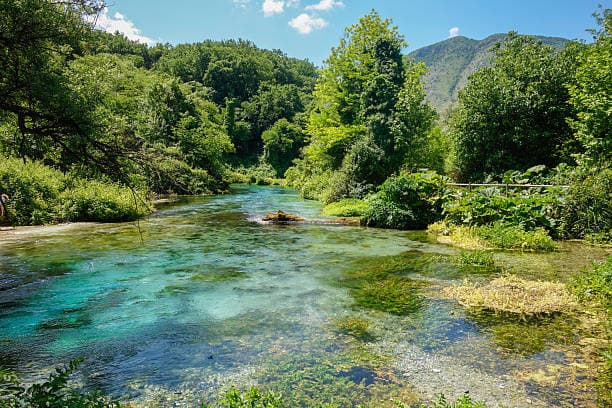
Landscapes alternate between beech and black pine forests, alpine pastures grazed by šarplaninec sheep flocks, gorges carved by the Radika river, and high-altitude glacial lakes. Lake Mavrovo, an artificial reservoir from 1947, occupies a basin at 1,200 m and mirrors the slopes of Bistra. In winter, the Mavrovo-Zare Lazarevski and Popova Šapka ski stations transform the region into a ski domain, modest by Alpine standards but the country's main one. For the rest of the year, it is the transhumance trails and old Ottoman paths that guide hikers.
The population mixes Orthodox Macedonians, Muslim Albanians predominant around Tetovo and Gostivar, and a Mijak community, a Macedonian group renowned for its woodcarving school and polyphonic vocal traditions. The village of Galičnik, perched at 1,400 m on the slopes of Bistra, is its historical heartland. Nearly deserted in winter, it comes to life every 12 July for Galička Svadba, a collective wedding celebrated according to Mijak rite with embroidered costumes, tapan drums and circle dances. The neighbouring village of Lazaropole, at 1,350 m, preserves the same stone and wood architecture, with its characteristic corbelled houses.
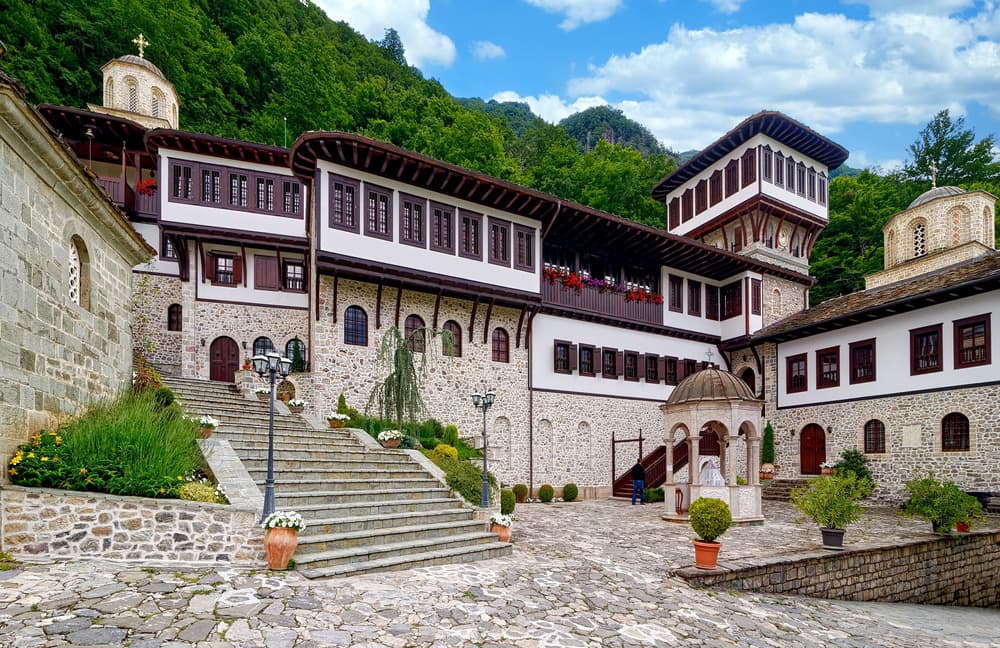
Religious heritage is dense. The Saint-Jean Bigorski monastery, founded in the 11th century and rebuilt after several fires, houses the iconostasis carved by Petre Filipovski Garkata between 1829 and 1835, considered the masterpiece of Balkan woodcarving: more than 500 human figures, biblical scenes interwoven with floral arabesques. Allow half a day on site with a guided tour by the monks. More discreet, the Saint-Jovan Osogovski monastery and small mountain churches at Rostuše and Janče reveal themselves along the valleys.
On the culinary side, the region cooks what altitude produces. Bieno sirenje cheese, aged in wooden barrels, accompanies rye bread in Galičnik's inns. Radika trout is served grilled at Janče, 20 minutes downstream from Bigorski. In Tetovo, tetovsko grozje pastries and Albanian börek mark Ottoman influence. Shepherds still descend in September with their flocks to the markets of Mavrovi Anovi and Debar, a chance to encounter a pastoral economy that has not disappeared.
For hikers, Šar Planina offers the country's most challenging trek: long ridges, sparse refuges, uneven markings. Popova Šapka, at 1,750 m, serves as a base for reaching Titov Vrv at 2,748 m in a day's round trip. Mavrovo lends itself to more accessible walks, in loops from Galičnik towards Mount Korab via the glacial valley of the seven lakes, a two-day journey with bivouac. It is also the region where one has the best chance of spotting the Balkan lynx, with a residual population monitored in the park.
To discover
Saint-Jean Bigorski iconostasis. Six years of carving in walnut between 1829 and 1835, more than 500 interwoven figures. The monastery is visited with a monk, in the Radika valley 30 minutes by road from Mavrovo.
Ascent of Titov Vrv. Emblematic summit of Šar Planina at 2,748 m, accessible in 6 to 7 hours round trip from Popova Šapka, along a clear ridge overlooking Kosovo and the Polog plain.
Galičnik and its July wedding. Mijak village at 1,400 m, almost uninhabited outside the season, which reenacts a traditional wedding every 12 July with embroidered costumes, tapan drum and circle dances open to visitors.
Radika valley and Janče trout. Wooded gorge between Mavrovo and Debar, where the river supplies a few family inns serving grilled trout on a plank, 15 km downstream from Bigorski monastery.
Crossing the seven glacial lakes of Korab. Two-day itinerary with bivouac, from the village of Tanuše towards the summit at 2,764 m, the Albanian border marked by a concrete stele inherited from Yugoslavia.
When to go
The comfortable window for hiking extends from mid-June to mid-October. In July and August, temperatures at 1,700 m oscillate between 18 and 22°C during the day, 8 to 12°C at night: bring fleece and windbreaker even in peak summer. Afternoon thunderstorms are frequent in July on Šar Planina's ridges, so we start ascents at sunrise. September is our favourite month: dry air, forests turning copper, pastures still grazed, temperatures of 15 to 20°C. From late October onwards, early snows close passes above 2,000 m.
From December to March, the region switches to winter mode. Popova Šapka and Mavrovo-Zare Lazarevski open their lifts with good snow cover between 1,500 and 2,500 m, station temperatures of -5 to 2°C. April and May are to be avoided for high-altitude hiking: unstable residual snow, muddy trails, prolonged mist on ridges. Valley floors, however, remain accessible year-round for monastery and village visits.
Practical advice
We recommend a minimum of 3 days on site to combine Mavrovo, the Radika valley and a Šar Planina summit. With 5 days, add Galičnik, Lazaropole and a two-day traverse in the national park. The logistical entry point is Skopje, 2 hours by road from Mavrovo and 45 minutes from Tetovo. No rail line serves the region, we work with driver or rental vehicle depending on itineraries. Main roads are paved, some tracks to Mijak villages require 4x4 after rain.
The most natural combination is with Lake Ohrid, 1.5 hours south of Mavrovo via the Debar road, allowing you to combine mountain and lakeside over 8 to 10 days. Connection with Skopje and the North is made at the start or end of the itinerary. Pelagonia and Bitola, further south-east, require longer transfers but complement well for a two-week trip. Comfort remains that of mountain inns and small family hotels, clean, heated, without luxury: we target this region at hikers, religious heritage enthusiasts and contemplative travellers who accept a slow pace. Families with young children can find their niche around Lake Mavrovo, less so on high-altitude itineraries.