Matka Canyon
Matka Canyon
Just 15 km from Skopje, Matka Canyon combines an artificial lake, karst caves, endemic biodiversity and medieval monasteries founded between 1370 and 1389.
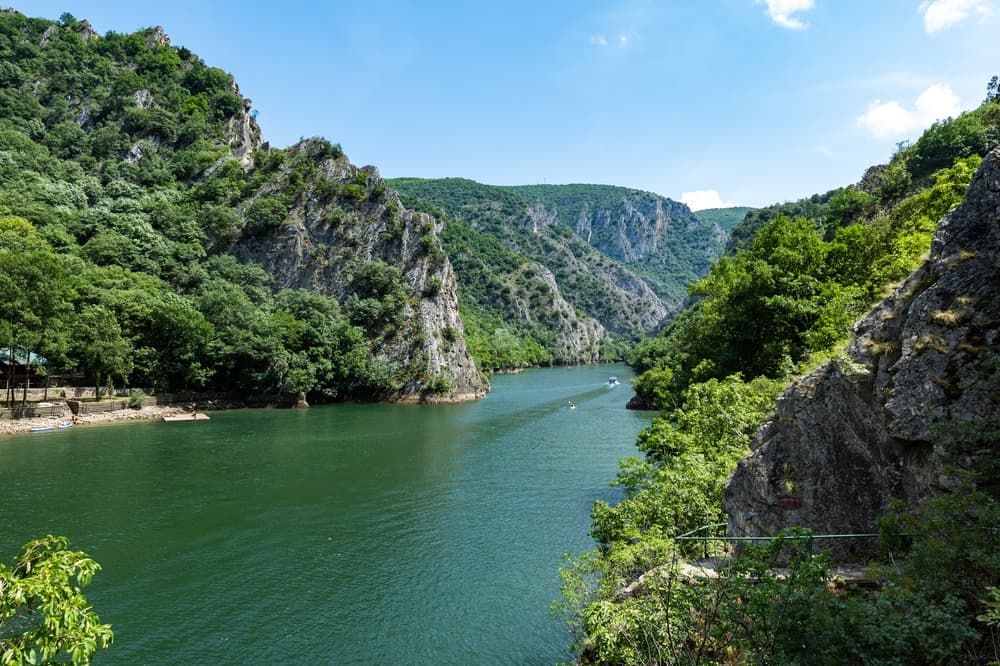
About fifteen kilometers from Skopje, Matka Canyon concentrates geological, biological and religious heritage across 5,000 hectares—a rare combination in Southeast Europe. Limestone cliffs, an artificial lake, karst caves and medieval monasteries coexist within a single perimeter, making it one of the most comprehensive day excursions from the Macedonian capital.
Why visit Matka Canyon
Matka brings together several compelling reasons for the detour. The site was shaped by the Treska River through the Suva Gora massif, then transformed in 1938 by the construction of a hydroelectric dam: the resulting lake is the oldest artificial lake in North Macedonia. The karst walls shelter remarkable endemic biodiversity, and three medieval Orthodox monasteries punctuate the shores, accessible on foot or by boat. Access to the canyon is free, allowing you to organize your visit at your own pace.
History of the site
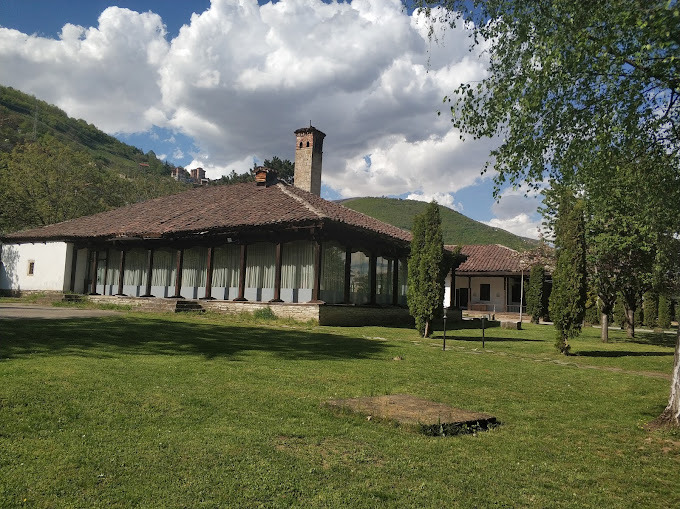
Before becoming a place for leisure, Matka was a spiritual refuge. The Matka Monastery, dedicated to the Holy Mother of God, was founded around 1370 by the noble Bojko on the left bank of the Treska. Damaged over the centuries, it was restored in 1497 by Milica Skopljanka, who added a narthex and new frescoes. The church preserves a renowned icon, the TrojeruČica (Virgin of Three Hands). King Alexander of Yugoslavia made a notable visit here in 1925.
A few years later, in 1389, Andrijaš, son of King Vukašin, founded the Saint Andrew Monastery on the shores of what would become the lake. Its triconch architecture and frescoes signed by Metropolitan John and the monk Makarios—including "Prayer on the Mountain" and "Washing the Feet of the Apostles"—rank among the country's best-preserved medieval painted ensembles.
The third building, the Saint Nicholas Šiševski Monastery, is more enigmatic. First mentioned in the 17th century, its iconostasis was painted in 1645 and the frescoes on its west façade date from 1630. Abandoned in the 18th century, briefly restored in 1816, it was again deserted in 1897 before reopening for worship more recently.
What to see and do
The lake and cliff walls
The path along the right bank, partially carved into the rock, leads in about thirty minutes to Saint Andrew Monastery. This is the most-traveled and simplest route, with regular viewpoints over the cliffs and water. Beyond, the path narrows and walking requires minimum agility.
Vrelo Cave
Among the ten caves recorded in the canyon, ranging from 20 to 176 meters in length, plus two vertical sinkholes 35 meters deep, Vrelo is the most visited. It ranks among the 77 finalist sites for the New7Wonders of Nature project and is often presented as one of the world's potentially deepest submarine caves—its exact depth remains unknown to this day.
The interior is punctuated with formations, including an imposing stalactite nicknamed the "Pine Cone." Two underground lakes occupy the cave's end: a small basin 8 meters long and 14.92 meters deep, and a large lake 35 meters long and 18 meters deep. Access is by boat from the landing, followed by a brief guided tour.
Fauna and flora
Nearly 20% of the canyon's flora is endemic, with relict species from the glacial period such as Ramonda nathaliae or Kosani violet. The site shelters 77 endemic butterfly species, 18 of which were first described here. The horned viper, one of Southeast Europe's most venomous snakes, is present: stay on trails and wear closed-toe shoes.
Water activities
Free kayak rentals, group boat trips to Vrelo and excursions to monasteries inaccessible on foot make up most of the water offerings. For longer stays, a few houseboats are rented on the lake, accessible only by boat. Swimming is permitted but the water remains cool year-round due to the Treska's circulation.
When to visit
The canyon is open year-round. April to June offers lush vegetation, mild temperatures and moderate crowds; it's also the best time to observe endemic flora. July and August are the busiest months: the parking lot fills by mid-morning and boats to Vrelo often reach capacity by midday. Autumn, through mid-November, remains a good window for hiking. In winter, the most exposed trails can be slippery and some water activities are suspended.
How to get there
By car
From central Skopje, allow about thirty minutes following the Tetovo direction, then Matka signs. The road narrows and becomes winding as you approach the canyon. Free parking is available at the entrance but fills quickly in high season; you can then park along the road upstream.
By bus
Urban line 60 connects Skopje to Matka several times daily. Departure is from the main bus station, under the railway bridge. Frequencies and exact terminus may vary: check schedules at the station before leaving.
By taxi
Taxi is the most direct option and avoids parking hassles. Drivers wait at the entry parking lot for returns to the city.
On foot from Mount Vodno
For experienced hikers, a marked trail connects Mount Vodno's summit to Matka: 13 to 15 kilometers over 4 to 5 hours depending on pace. Bring water and hiking boots.
Practical information
- Site access: free and open.
- Duration of visit: 2 to 3 hours for the main trail and one monastery; half a day to a full day if you add Vrelo and kayaking.
- Dining: a restaurant and picnic areas are set up near the entrance.
- What to bring: closed-toe shoes, water, warm clothing for boat excursions, swimsuit if you plan to swim.
- Guided tours: offered at the visitor center at fixed times, particularly for Vrelo Cave.
Nearby attractions
If you extend your stay in Macedonia, several sites complement a Matka visit well:
- The Saint John Bigorski Monastery, in the country's west, for its carved iconostasis.
- Arabati Baba Teqe in Tetovo, a rare example of a Bektashi dervish convent.
- The Bay of Bones on Lake Ohrid, a reconstruction of a prehistoric stilt village.
- The Galitchitsa National Park, between Lakes Ohrid and Prespa.
Frequently asked questions
Frequently asked questions
Yes, swimming is permitted near the dam and along accessible banks. Water stays cool year-round as it's fed by the Treska; it's best to enter gradually.
Allow 2 to 3 hours to walk the main trail and reach Saint Andrew Monastery. A minimum of half a day if you add the boat trip to Vrelo Cave, a full day to combine kayaking and monastery visits.
Boats operate on a fill-as-you-go basis and reservations are generally not available. In high season, arrive early at the landing to minimize wait time.
The main trail to Saint Andrew Monastery is family-friendly, with a few narrow passages to watch. Boat trips and tandem kayaking appeal to children from 6-7 years old.
The species is present but discreet. Stay on trails, wear closed-toe shoes and avoid putting your hands into rock crevices: the risk then becomes very low.
Plan your trip
Matka Canyon integrates easily into a wider circuit combining Skopje, Ohrid and the western massifs. To build a tailor-made itinerary including this stop, consult our travels in Macedonia.
Interested in this visit?
We can include it in your personalised itinerary.