Galitchitsa National Park
Galitchitsa National Park
Between Lakes Ohrid and Prespa, Galitchitsa National Park protects 227 km² of karstic massif, rare biodiversity and remarkable Byzantine heritage.
Galitchitsa National Park stretches across the limestone massif that separates Lake Ohrid from Lake Prespa, in southwestern North Macedonia. Established in 1958, it protects 227 km² of karstic terrain, beech forests and alpine meadows up to the summit of Magaro (2,254 m). The park shares with the Macedonian shore of Lake Ohrid a UNESCO World Heritage listing since 1979.
Why visit Galitchitsa National Park
Galitchitsa brings together rare European biodiversity and ancient religious heritage within a single territory. The park is home to 18 species of mammals including the Balkan lynx, grey wolf, brown bear and Balkan chamois, 124 bird species and 1,644 recorded butterfly species. Its flora encompasses over 1,600 plant species, a significant portion of which are endemic.
The site's other appeal lies in its position: the panoramic road crossing the massif connects within a few kilometers two of Europe's oldest lakes, with plunging views over Ohrid on one side and Prespa on the other.
History and protected status
The park was created in 1958 to preserve the massif's fauna and flora. In 1979, Lake Ohrid and the adjacent zone, which includes part of the park, were inscribed on the UNESCO World Heritage List for their biological and cultural richness.
Management today relies on a conservation programme supported by the Prespa Ohrid Nature Trust (PONT), which funds monitoring of threatened species, trail maintenance and awareness-raising activities among visitors and residents of surrounding villages.
What to see in the park
Relief and landscapes
The massif culminates at Magaro (2,254 m), accessible on foot from the Baba site. The route crosses glacial cirques and alpine pastures. Three climatic zones succeed one another from bottom to top: Mediterranean near Ohrid, temperate continental in intermediate valleys, and montane on the ridges. This elevation gradient explains the botanical diversity observed over short distances.
Forests and flora
The lower slopes are covered with oak and beech forests. Intermediate slopes host black pine forests and fir groves. Higher up, alpine meadows shelter 600 recorded plant species, including wild orchids and several medicinal plants. The park contains a total of 170 species of trees and shrubs.
Religious heritage
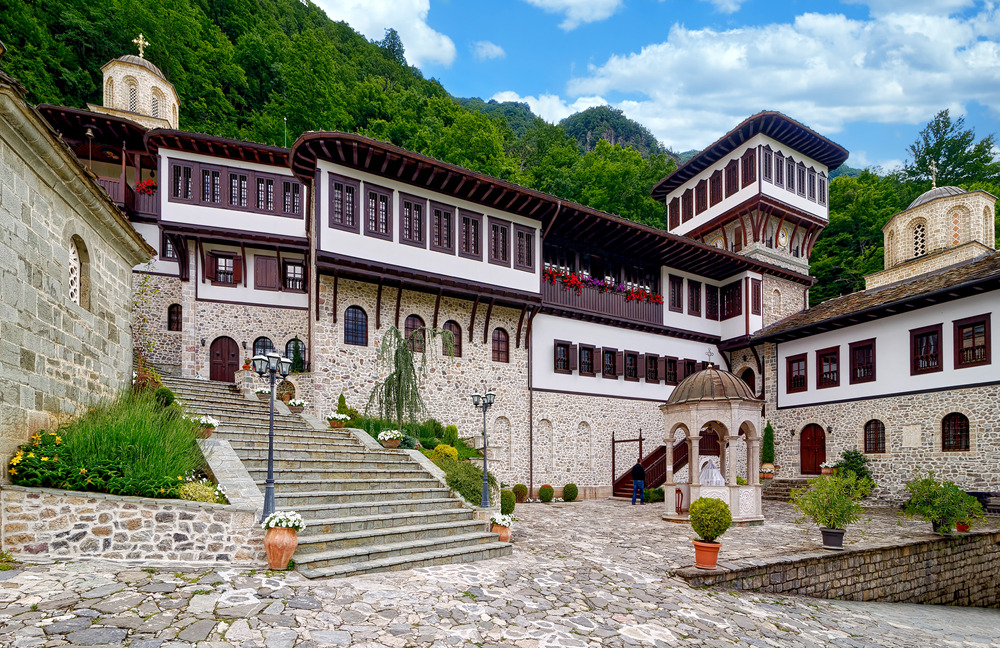
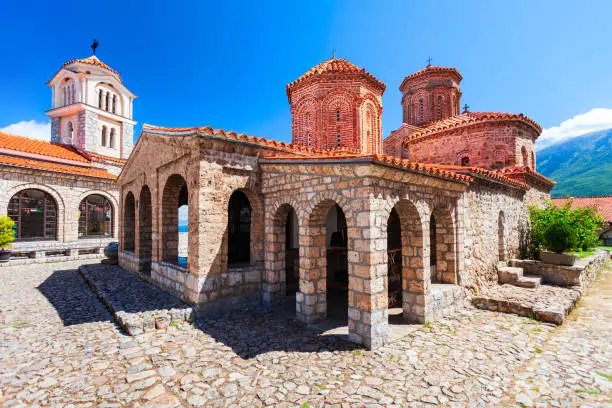
The park territory concentrates several important religious structures. The Byzantine church of Holy Mother Zaumska, built in 1361 on the eastern shore of Lake Ohrid, preserves remarkable frescoes. The rupestral church of Holy Mother at Peštani dates from the 14th century, and St Stephen's church dates back to the 9th century. These sanctuaries testify to the depth of Christian settlement in the region.
Saint Naum springs
At the southern tip of Lake Ohrid, near the Saint Naum monastery, several springs feed a small lake dotted with two islets. These waters come from underground rivers originating in Lake Prespa, threading through the karstic massif. The site is home to several aquatic species, including the Ohrid whitefish, a fish endemic to the lake.
Golem Grad Island
Located on Lake Prespa, Golem Grad Island was occupied from the 4th century BC to the 6th century. Remains of Hellenistic and Roman houses can be seen, as well as ruins of medieval churches and monasteries. The island is also known for its colony of tortoises and cormorants.
When to visit
The favourable season extends from April to November. Spring highlights the flowering of the meadows, summer (June to September) offers the best conditions for high-altitude hiking and swimming in nearby lakes. October and early November are suited to walks through deciduous forests, with milder temperatures. Winter, from December to February, closes part of the high-altitude trails and limits access due to snowfall.
Activities and trails
Hiking is the main activity. The ascent of Magaro from Baba is the most well-known route. The Velestovo trail, shorter and more accessible, opens onto a frontal panorama of Lake Ohrid. The Korita trail offers a leisurely walk through meadows and copses.
The park also lends itself to mountain biking, with trails suited to different levels, birdwatching (golden eagle, peregrine falcon, common buzzard), climbing on limestone cliffs and caving in the massif's caves.
Practical information
Certain park zones are subject to a modest entrance fee, intended to finance conservation. Bring water, hiking shoes and a windbreaker even in summer: temperatures drop rapidly above 1,800 m. Allow half a day for a panoramic trail (Velestovo, Korita) and a full day for the ascent of Magaro.
No town is located within the park. Visitors typically stay in Ohrid or one of the access villages.
How to get there
The park is accessible by car from Skopje, approximately 3 to 4 hours' drive away. The panoramic road crossing the massif connects Lake Ohrid to Lake Prespa via the Galitchitsa pass. Eighteen villages line the access routes. On the Ohrid side: Peštani, Velestovo, Dolno Konjsko, Elšani, Trpejca. On the Prespa side: Oteševo, Elva, Konjsko. Trpejca and Peštani offer the most developed accommodation options on the lakeshore.
Nearby
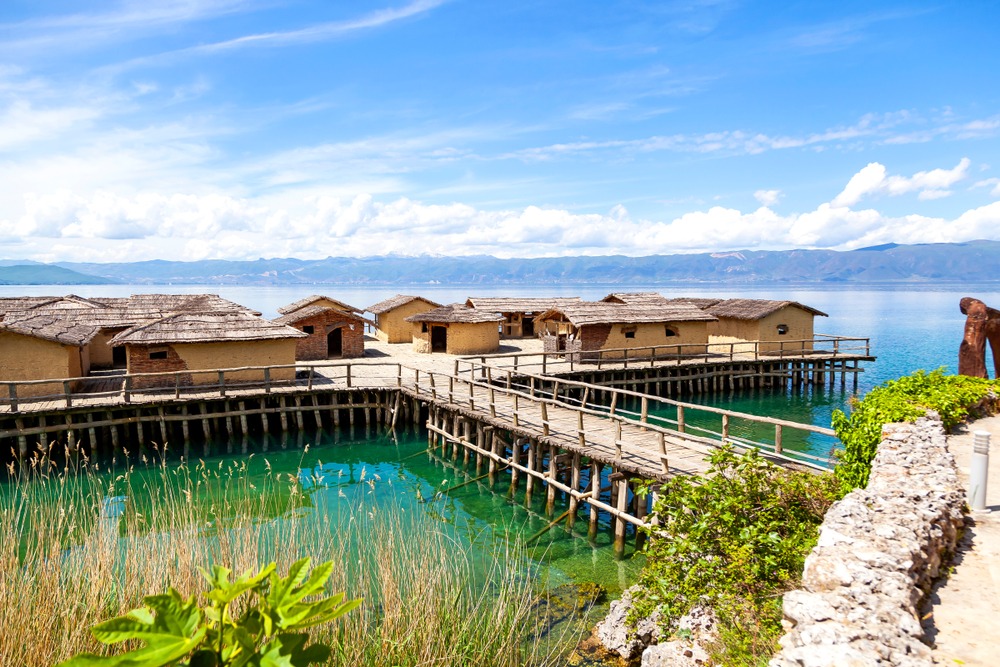
The region offers several natural extensions to a park visit. The town of Ohrid, on the northeastern shore of the lake, concentrates first-class Byzantine heritage. The Bay of Bones site, a reconstruction of a prehistoric lakeside village, is nearby. Further north, the Matka Canyon near Skopje complements a nature itinerary well, while the Saint John Bigorski Monastery extends the heritage dimension in the neighbouring Mavrovo massif.
Frequently asked questions
Frequently asked questions
April to November, with an optimum from June to September for high-altitude hiking. Winter is harsh and limits access to high trails.
Half a day is sufficient to drive through the park with a few panoramic stops. Allow a full day for the ascent of Magaro or to combine hiking and a visit to the Saint Naum springs.
Certain zones are subject to a modest entrance fee, intended to fund conservation. Main trails and the panoramic road remain free to access.
The species is present but extremely elusive and endangered. Chances of observation are very slim. Conversely, birdwatching for raptors, chamois and butterflies is regular at higher elevations.
Allow 3 to 4 hours by car. The capital is well served by international flights, making access relatively simple by renting a vehicle at the airport.
Plan your trip
To integrate Galitchitsa into a broader itinerary between lakes, monasteries and Balkan reliefs, consult our trips to North Macedonia.
Interested in this visit?
We can include it in your personalised itinerary.